
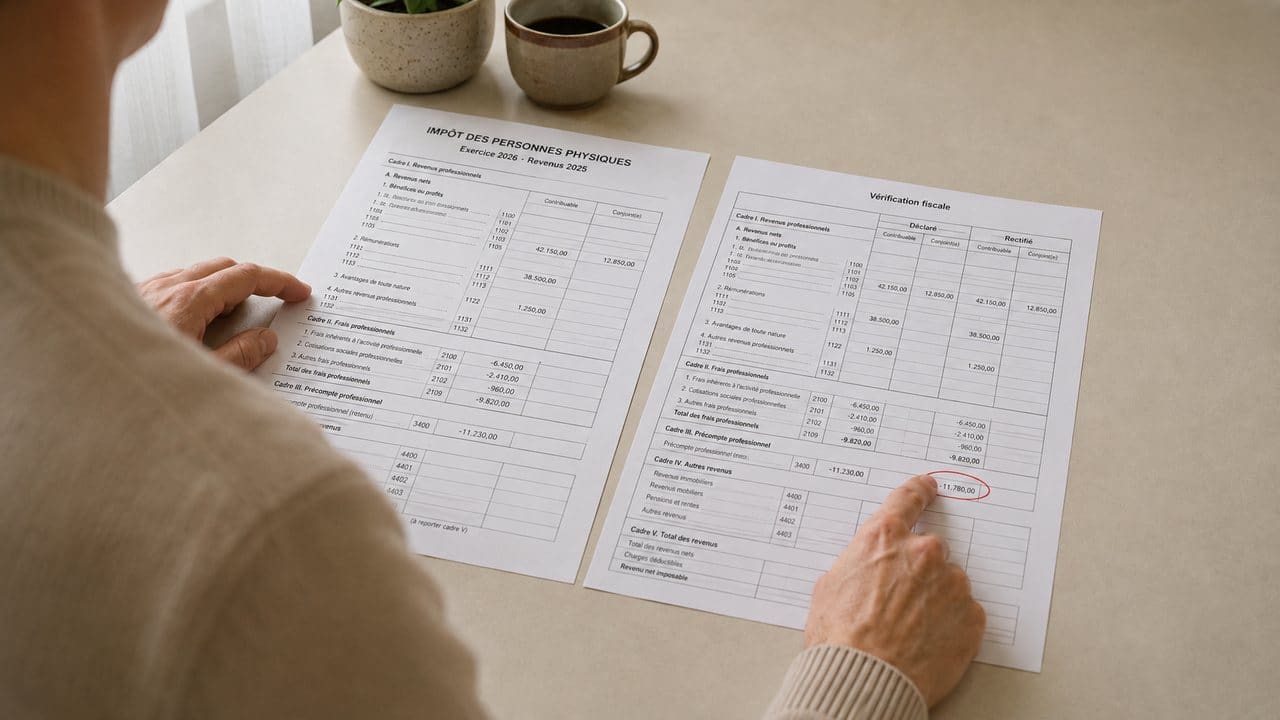
A notice of rectification in Belgium sets out changes the tax authorities propose to make to your return. It does not mean that their position is final: you can still accept the adjustment or submit your observations.
In our article on preparing for a tax audit in Belgium, we explained how to organise your file, respond to the authorities’ requests and reduce the risk of adjustments.
If the authorities conclude from their checks that certain items should be corrected, it is essential to meet the deadline, examine their arguments carefully and prepare a structured response.
Understand what the authorities want to change
The notice of rectification must explain the changes proposed to your return and the reasons supporting the authorities’ position.
An adjustment may concern:
- income considered undeclared or underdeclared;
- business expenses that have been disallowed;
- a disputed tax reduction or deduction;
- property income;
- foreign income or accounts;
- the tax classification of a transaction;
- benefits granted to a director or employee.
The first step is to identify precisely:
- the assessment year concerned;
- the amounts the authorities propose to change;
- the facts relied on;
- the calculation method;
- the tax arguments put forward.
Review the notice as a whole before deciding whether to accept or challenge it.
Notice of rectification: check the response deadline
A notice of rectification should never be left unanswered.
For income tax, taxpayers generally have one month to submit their observations. For a notice sent by registered post, this period runs from the third working day following dispatch. Check the notification method and deadline stated in your notice.
As soon as you receive the document:
- record the dates of dispatch and receipt;
- identify the exact deadline;
- keep the envelope or proof of notification;
- start gathering the relevant documents immediately.
A late response or failure to respond can seriously weaken your position and lead to an ex officio assessment. FPS Finance explains the consequences of failing to respond in its guidance on tax return rectification (in French).
Compare the proposed adjustment with your tax file
Before responding, compare the authorities’ arguments with the evidence actually available in your file.
In particular, check:
- the tax return originally submitted;
- available supporting evidence;
- tax statements;
- contracts and accounting records;
- relevant bank transactions;
- Belgian and foreign income;
- applicable tax provisions;
- any relevant international treaties.
Some adjustments arise simply because information is missing or a supporting document has not been provided. Others involve a disagreement about the interpretation of tax rules and require more detailed reasoning.
The aim is to establish exactly which points are justified and which can be challenged.
Prepare a precise, documented response
Simply stating that you disagree with the authorities is rarely sufficient.
Your response should address the different points in the notice and, where necessary, set out:
- the correct facts;
- supporting documents;
- relevant calculations;
- the tax interpretation you are defending;
- the applicable statutory or treaty provisions.
Attachments should be organised and easy to identify. You should also keep a complete copy of your response, attachments and proof of submission.
The response to a notice of rectification is an important procedural step: the arguments presented may directly influence what happens next.
Should you accept or challenge the notice of rectification?
A notice should neither be accepted automatically nor challenged as a matter of course.
There are three possible approaches:
- accept the adjustment if the authorities’ conclusions are correct;
- challenge the adjustment if it relies on incorrect facts or a questionable interpretation of tax rules;
- accept some points and challenge others.
Before accepting an adjustment, it is important to assess its consequences. A correction may affect:
- the amount of tax due;
- any interest or tax increases;
- several assessment years;
- the tax position of a company or its director;
- the future treatment of similar transactions.
A review of the entire file is therefore preferable to a rushed response.
What happens if the authorities maintain the adjustment?
If the authorities do not accept your observations, they may maintain all or part of the proposed adjustment. They must explain why they reject your arguments in a notification of their decision to assess tax.
You may then receive a tax assessment notice setting out the assessment issued. At this stage, a different procedure may be necessary: a formal tax objection.
The distinction matters:
- the notice of rectification comes before the proposed additional tax is assessed;
- a formal tax objection challenges an assessment that has already been issued.
The objection deadline is separate from the deadline for responding to the notice of rectification. Check it as soon as you receive the tax assessment notice.
A carefully prepared response therefore helps you defend your position immediately and prepare for a possible objection procedure.
Which mistakes should you avoid?
Certain reactions can unnecessarily weaken your defence:
- ignoring the notice or responding late;
- accepting an adjustment without checking the calculations;
- challenging it without supporting evidence;
- giving contradictory explanations;
- sending documents without reviewing them first;
- responding emotionally rather than factually;
- overlooking consequences for other assessment years;
- underestimating the international aspects of the file.
A tax adjustment should be treated as a formal procedural stage. Your response must be consistent with the information already provided during the audit.
Why seek help from a tax expert?
Where significant amounts are involved or the file is complex, a tax expert can help structure your defence.
Their assistance may include:
- analysing the notice of rectification;
- checking the authorities’ calculations;
- examining supporting evidence;
- identifying relevant tax arguments;
- drafting the response;
- handling exchanges with the inspector;
- filing an objection if the adjustment is maintained.
This support is particularly useful for company directors, self-employed individuals, expatriates, taxpayers with foreign income and files covering several assessment years.
At Tax Law International, we assist individuals and businesses in analysing and challenging tax adjustments, as well as in any resulting objection procedures.
Have you received a notice of rectification?
Do not let the response deadline pass without carefully examining the authorities’ arguments and their consequences.
Explore our tax procedures service for objections and notices of rectification, or contact Tax Law International for a confidential review of your file.